

Short answer: The best time to wax your car is during spring and fall, especially after a thorough car polishing and cleaning to remove built-up grime and prepare the paint for protection.. Spring waxing protects your paint from summer sun and UV damage, while a fall coat shields it before winter throws snow, salt, and freezing temperatures at it. Wax whenever you want for shine, but if you’re doing it strategically, these two windows matter most.
I’ve had customers ask why their wax barely lasted a season, and nine times out of ten, timing was the issue. Applying wax right before a heatwave or a snowstorm just isn’t setting it up to do its job properly. Let’s get into why the season actually changes the outcome.
Spring waxing sets you up for summer
Once the snow melts and the roads clear up, your car’s paint has usually taken a beating from months of salt, slush, and grime. Spring is the perfect time to clean all that off, consider car polishing if the paint looks dull, and then lay down a fresh coat of wax before the sun really kicks in.
A good wax layer acts as a barrier against UV rays, which is a bigger deal than people realize. UV exposure is one of the main reasons paint fades, oxidizes, or starts looking dull over time. Waxing in spring means your car is protected right when it needs it most.
Fall waxing prepares your car for winter
This one’s just as important, maybe more so if you’re anywhere that gets real winters. A fall wax job creates a protective layer before road salt, slush, and freezing temperatures start working against your paint.
Road salt in particular is brutal on a car’s exterior. It speeds up corrosion and can eat away at unprotected paint over the winter months. A solid coat of wax going into the cold season gives your car a fighting chance against all of that.
Summer and winter waxing come with challenges
You can technically wax your car any time of year, but summer and winter aren’t ideal. In summer, extreme heat can cause wax to dry too fast or apply unevenly, making it harder to get a smooth finish. In winter, the cold makes wax harder to work with and it won’t bond to the paint as well.
If you do need to wax during these months, working in the shade or a controlled indoor space makes a real difference.
How to Tell If Your Wax Has Worn Off
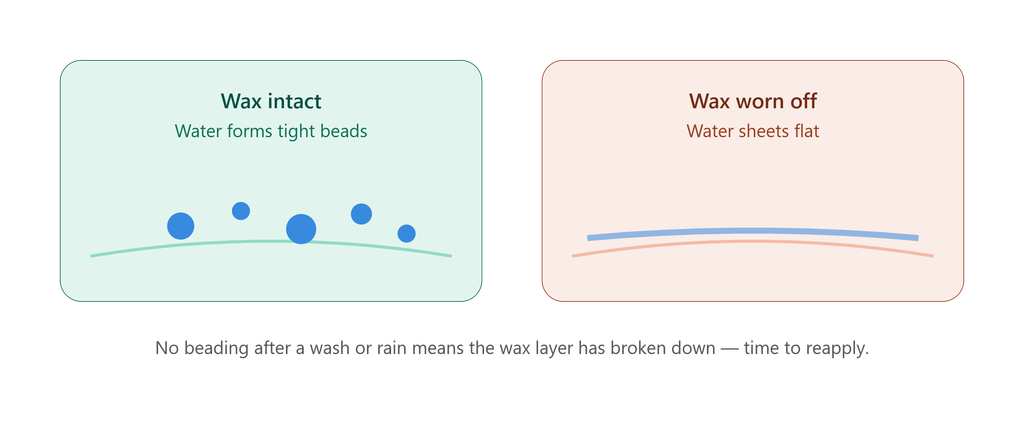
The easiest way to check is the water test. After a wash or rain, look at how water sits on your paint. If it forms tight, round beads, your wax layer is still doing its job. If water spreads out and sheets flat across the surface instead, the wax has broken down and it’s time to reapply — regardless of what season it is.
How Long Does a Wax Job Actually Last
A DIY wax job typically holds up for a few weeks, while a professional application can last several months. A few things speed up wear: frequent exposure to rain and direct sun, bird droppings sitting too long before being cleaned off, and washing your car too often. Storing your car in a garage or covered spot is one of the simplest ways to make a wax job last longer.
Can You Wax Your Car Too Often?
Yes — waxing too frequently causes product buildup, which leaves a cloudy, dull film instead of a clean shine. Most waxes also work best on a wax-free surface, so over-application just means more work removing old layers before the next coat. Stick to the seasonal schedule (2–3 times a year) rather than topping up constantly.
How often should you actually wax
Most cars benefit from being waxed two to three times a year, while car polishing may be needed less often when the paint starts looking dull or develops light surface imperfections. Spring and fall are non-negotiable if you want real protection, and a lot of people add a summer touch-up if their car is getting heavy sun exposure or frequent washes, since both wear down wax faster than people expect.
Think of wax less like a one-time task and more like ongoing maintenance. Your paint is exposed to something new almost every day, sun, road grime, rain, salt, so keeping that protective layer fresh matters more than most car owners realize until they see the difference on a well maintained vehicle.
FAQs
Does washing my car wear down the wax faster?
Washing too often can strip wax prematurely. Washing every two weeks is a good balance — frequent enough to protect the paint, without breaking down your protection too fast.
Should I polish my car before waxing?
Yes. If your paint has light swirl marks, oxidation, water spots, or a dull appearance, polishing before waxing can improve the finish and help create a cleaner surface for the wax. Wax can then add a protective layer over the polished paint.
Can I wax my car immediately after polishing?
Yes. Once polishing is complete and the paint is clean and free of residue, you can apply wax. Waxing after polishing helps protect the improved finish and preserve the gloss.
What weather is best for car polishing and waxing?
A cool, dry day with the vehicle kept out of direct sunlight is generally ideal. The paint should be clean and cool to the touch before applying wax, as excessive heat can make application and removal more difficult.
Quick recap:
- Spring waxing protects paint from UV damage before summer heat hits
- Fall waxing shields your car from road salt and winter grime
- Summer and winter waxing are possible but trickier to get right
- Consistent waxing keeps paint looking newer for longer
If your paint has lost its shine, combining car polishing with a fresh wax can help restore its appearance and add another layer of protection.
Not sure your wax job is holding up the way it should? Yellow Star offers professional car detailing across Canada, with waxing done right for every season. Book an appointment with our team and give your car the protection it actually needs.